Sandstone Paving is an extremely popular option for outdoor areas due to its natural beauty and flexibility. Being a sedimentary stone, sandstone is distinguished by its natural variations in grain, colour, and surface texture. This creates a distinctive appearance. The inherent variation is important to comprehend when defining the project to effectively manage expectations of the client. The composition of the sandstone’s geology determines its porosity, durability, and resistance against weathering. This directly impacts its performance over time. Different types of sandstone can be used in all outdoor conditions.
The quarry’s source, processes for grading and processing can play an important role in determining the dimensional precision, consistent finish, and quality of sandstone pavers. These variables can affect the efficacy of installation and the appearance of the work. The selection of the appropriate sandstone material for your needs in paving will require careful evaluation of these factors to ensure a smooth and long-lasting installation.
Sandstone Paving’s Technical Features
The technical characteristics of sandstone paving are essential when determining whether it is suitable for diverse applications. The porosity of the stone is an important aspect, as it influences the rate of absorption of moisture, staining ability, staining resistance, and freezing performance, especially in areas that are shaded or exposed. Stones with higher porosity may require sealing and may require more frequent maintenance to maintain their appearance and quality.
The thickness and density of the pavement determine the load capacity and appropriateness for pedestrians and light vehicle use. Selecting the right thickness minimizes the chance of breaking and cracking of the surface, which will ensure the durability of the paving. Furthermore, the finishes of sandstone pavements affect the resistance to slip, cleaning ease, and the visual appearance. The finishes should be in line with the purpose and safety specifications of the area.
Uses and Design Factors
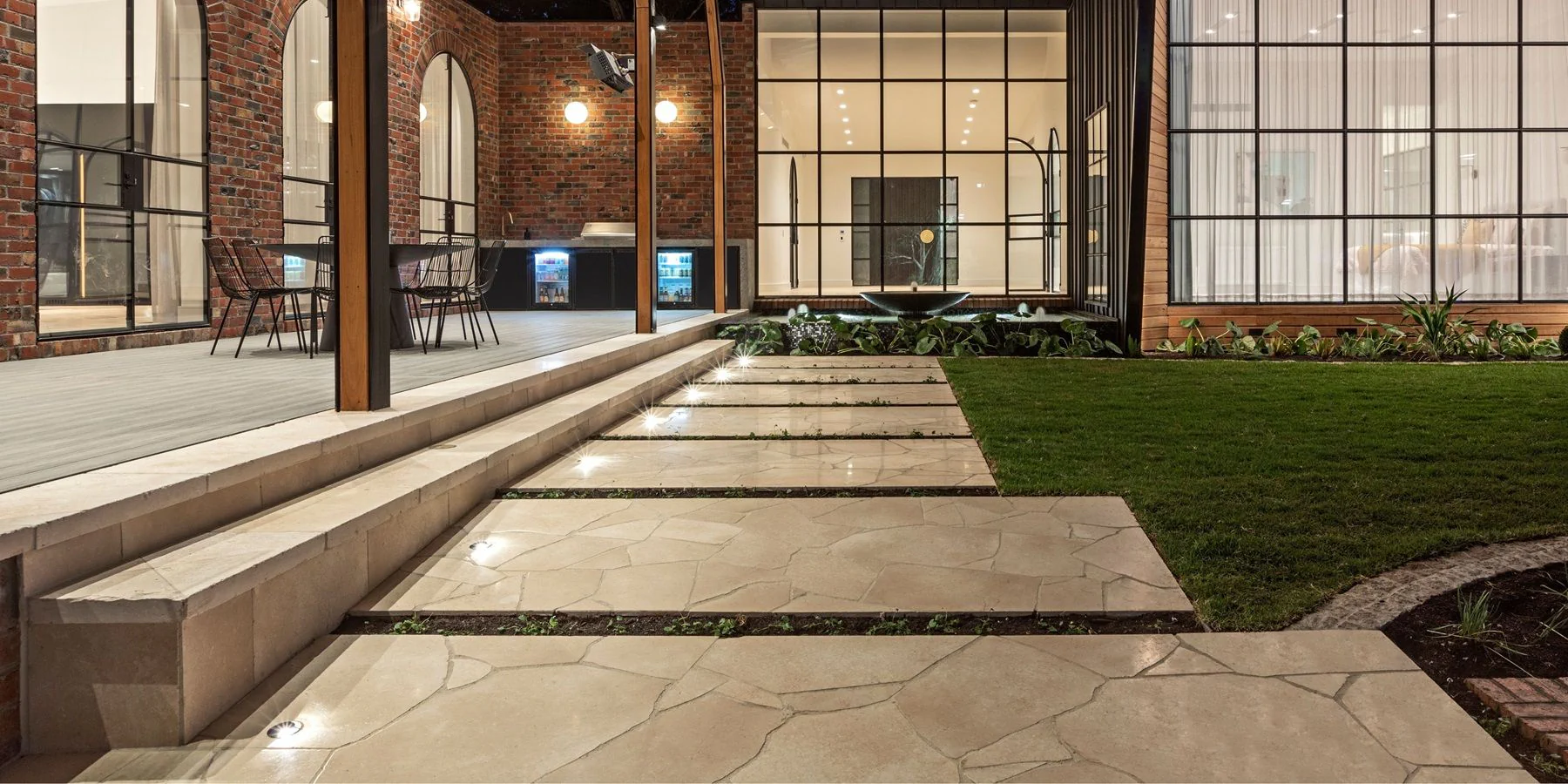
Sandstone is extensively used for patios, gardens, terraces, and even for landscaped circulation areas because of its natural look and flexibility. When choosing sandstone to be used in the above-mentioned purposes, it’s important to think about factors like the weather, traffic, and other materials. Sandstone’s color variation determines how schemes age and respond to weathering, with certain tones becoming lighter or more mellow with time. The aging effect should be considered in the design intention to create an enduring and consistent aesthetic.
Joint widths and layout patterns are important design elements, since they affect the size as well as the rhythm and visually unified look of the pavers, especially in huge spaces or formal designs. Planning carefully can increase the impact of sandstone in any outdoor area.
Requirements for Installation and Aftercare
Proper installation and maintenance are crucial to maintain the aesthetics and function of sandstone pavers. Bedding depth, the composition of mortar, and the method of priming all impact longevity and stability as well as resistance to moving. A complete bedding process is vital to prevent hollow spots and cracks in the future, to ensure a sturdy and long-lasting construction.
Materials used for jointing have a crucial impact on determining permeability resistance to weeds, as well as resistance to erosion during weather exposure. The selection of materials for jointing should be based on the aesthetic and performance requirements in order to attain the desired results. In addition, sealing and maintenance schedules are essential for maintaining the color, minimizing staining, and preserving the integrity of the surface of Sandstone pavers, especially in shaded or high-use areas.
Change Your Outdoor Space by Using Sandstone Paving
If you’re considering paving with sandstone as a possible next project, knowing these essential factors will ensure the success of your installation. When you’re creating a terrace, patio, or pathway for your garden, sandstone provides an enduring and flexible solution that will add beauty to every outdoor area. Find out the possibilities, and learn the ways sandstone can change your surroundings with its natural appeal and long-lasting appeal.